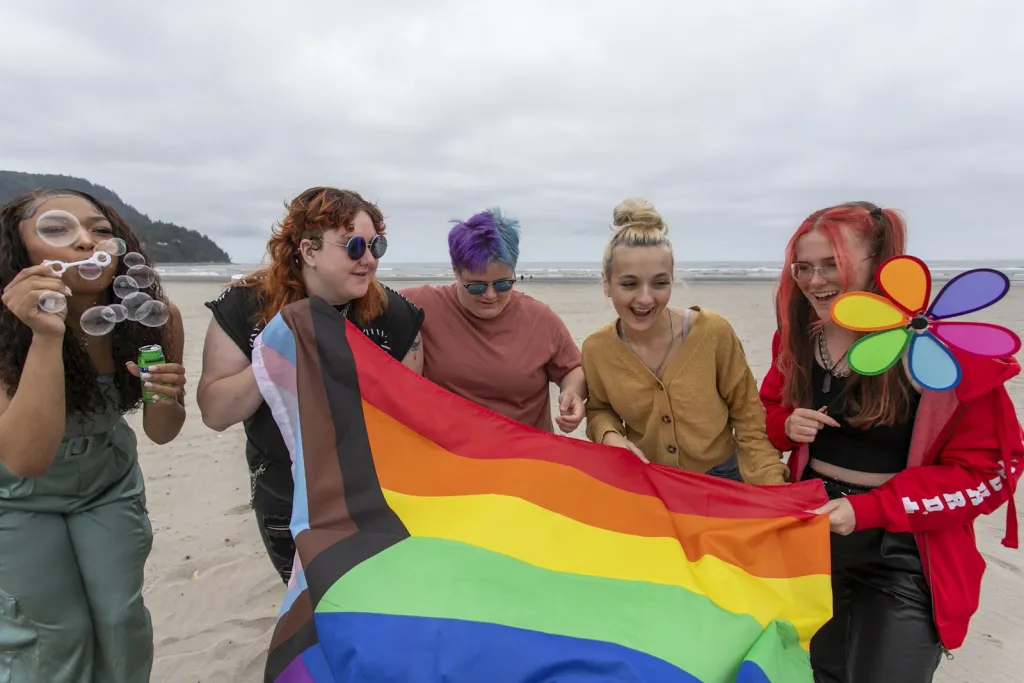
Being Yourself Shouldn't Put You at Risk
Every youth in foster care deserves to feel safe and supported, regardless of their sexual orientation, gender identity and expression.
Why it Matters
Lesbian, Gay, Bisexual, Transgender, Queer/Questioning and 2-Spirit (LGBTQ2S+) youth often encounter discriminatory and inequitable treatment in the foster care system simply due to their sexual orientation, gender identity, and/or expression. Improved policies and practices are essential, and are most effective when led by LGBTQ2S+ Lived Experience (LEx) Leaders who have firsthand experience within the system. These targeted improvements serve to provide LGBTQ2S+ identifying youth with the specific support and protection they rightfully deserve.
Quick Facts
- Approximately 30% of youth in foster care identify as LGBTQ+, compared to 11.2% of youth not in foster care. (Children's Rights)
- 44% of LGBTQ+ youth in in foster care report they were removed, ran away, or were thrown out of their homes due to their sexual orientation or gender identity. (Children's Rights)
- LGBTQ+ youth in foster care are more likely to experience discrimination, multiple placements, and placement in group homes compared to their non-LGBTQ+ peers. (HRC)
- LGBTQ+ youth who have been in foster care are nearly three times more likely to attempt suicide compared to those who have not been in foster care. (Trevor Project)
"We need to make sure LGBTQIA2S+ youth are represented and protected no matter what services they are getting and where they’re at."
— Keona Rose, She/Her, Spent time in Arizona foster care system
Tools You Can Use
- Learn the Basics: Build your understanding of LGBTQ2S+ issues in foster care with FosterClub's Supporting LGBTQ2S+ Youth in Foster Care foster parent training.
- Support LGBTQ2S+ Youth: Access affirming resources for caregivers and professionals through the National SOGIE Center and the Guide for Foster Parents.
- Understand the Data: Learn why collecting SOGIE data matters and how it improves outcomes for LGBTQ2S+ youth in care.
- Create Affirming Environments: Learn strategies for building supportive communities and child welfare systems for LGBTQ2S+ youth through this resource from the Center for the Study of Social Policy.
How We're Working on This Issue
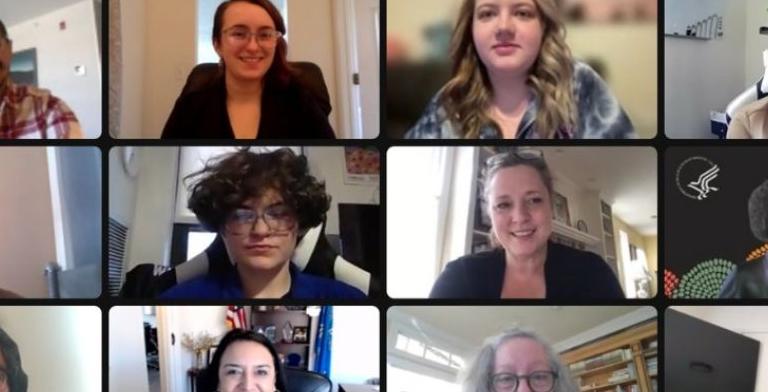
Speak with Federal Officials About SOGI Data Collection
LGBTQ2S+ FosterClub LEx leaders often meet with federal officials to discuss their experiences related to sexual orientation and gender identity (SOGI) while in foster care. Conversations range from whether youth feel safe disclosing their SOGI, to the impact of coming out during their time in foster care.
Read more about this work here.
Advocate for Laws to Fight Discrimination by Agencies
FosterClub's LEx Leaders work with a coalition of national organizations to protect LGBTQ2S+ youth and families in foster care. When a new federal rule was proposed to prevent discrimination by federal agencies, LEx Leaders shared their experiences to show why these protections matter for LGBTQ2S+ youth in care.
Read more about this work here.

Contribute to Government Reports
FosterClub's Lived Experience (LEx) Leaders worked with the Government Accountability Office to share their foster care experiences, focusing on LGBTQ2S+ identity and religious background. Their stories helped shape a report with recommendations for how states can better support LGBTQ2S+ youth.
Read more about this work here.
One thing I truly admire is the strength and resilience of same-sex [foster] parents. It’s an incredibly difficult process...their dedication to providing safe, loving homes [to foster youth] despite the hurdles is nothing short of inspiring."
— Gabe Foley, He/Him, Spent 18 years in Illinois foster care system
Want to Learn More?
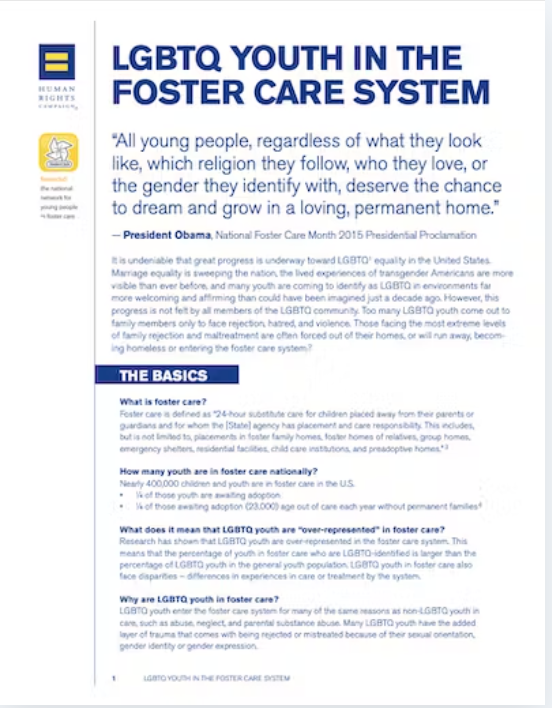
LGBTQ2S+ Youth in the Foster Care System from Human Rights Campaign and FosterClub

LGBTQ in Child Welfare from the Annie E. Casey Foundation
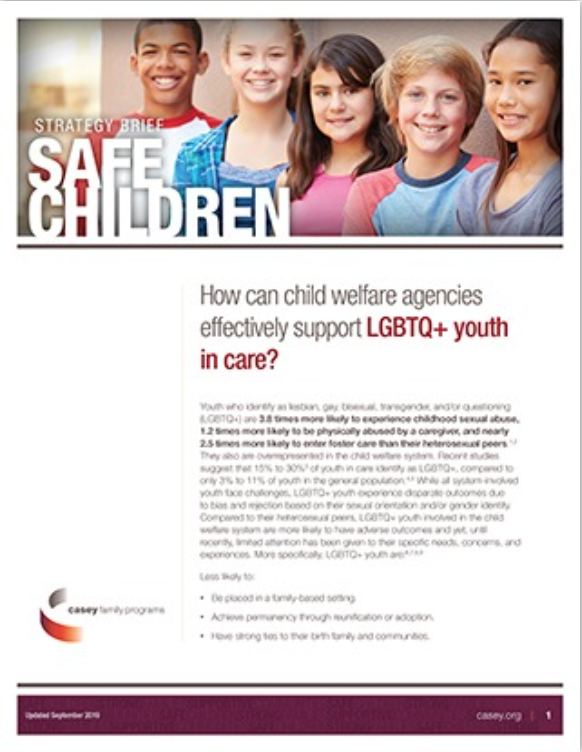
How can child welfare agencies effectively support LGBTQ+ youth in care? from Casey family Programs
Blogs on LGBTQ2S+ Youth
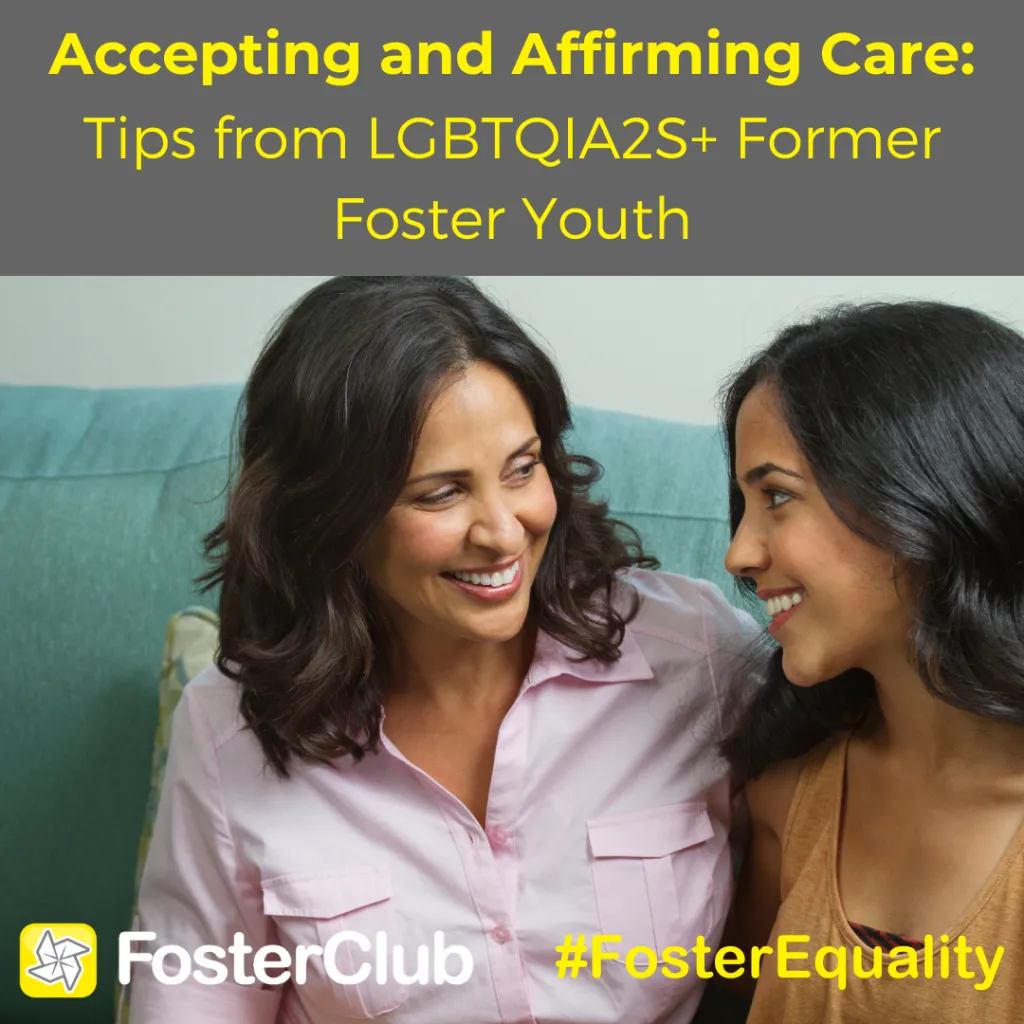
Accepting and Affirming Foster Care: Tips from Former Foster Youth
For LGBTQIA2S+ youth in foster care, acceptance from foster care providers and professionals improves their mental and physical wellbeing, as well as protects them against risky behaviors such as substance misuse. Experiencing identity rejection can diminish a queer foster youth’s sense of self worth, self-esteem, and belonging. Here are a few tips from LGBTQIA2S+ individuals with lived experience in foster...

LEx Leaders meet with Federal Foster Care Leadership
On Friday, February 10th, FosterClub co-hosted a roundtable discussion with the Administration for Children and Families on the experiences of LGBTQIA2S+ youth in foster care as well as the importance of Sexual Orientation and Gender Identity (SOGI) data collection. The roundtable brought together a group of Lived Experienced Leaders (LEx) to engage with Assistant Secretary January Contreras (Administration for Children...

Every Child Deserves a Family… And Some Good Trouble
In memoriam of the Honorable John Lewis and his fight for LGBTQIAS+ equality in child welfare. “ So many children dream of a stable loving family. Many adults want to open their homes and their hearts, but they face barriers because the system says that they follow the wrong religion, that they love the wrong person, they’re not married. My...
Practice Improvement: What can I (professionals + advocates) do to improve the experience of LGBTQIA2S+ youth in foster care?
In our last “Practice Improvement'' blog we covered how agencies can improve the experience of LGBTQIA2S+ youth in foster care. This time around, we’re going to build off of that by looking at what you, as an individual agency professional or advocate, can do in your individual work to improve the experience of LGBTQIA2S+ youth in foster care. What can...
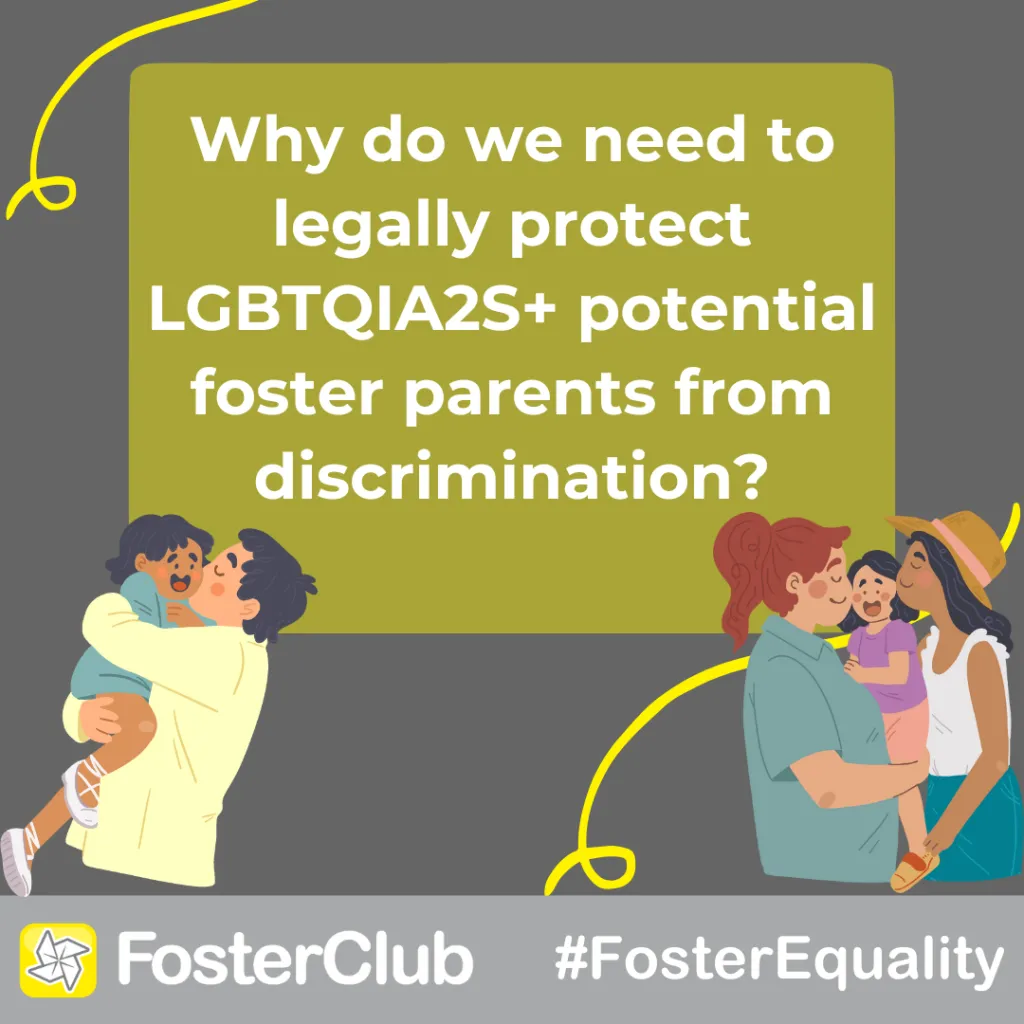
Policy Corner: Why do we need to legally protect LGBTQIA2S+ potential foster parents from discrimination?
LGBTQIA2S+ youth in foster care experience higher rates of discrimination in the child welfare system, as opposed to their heterosexual peers, due in part to potential families' unwillingness to foster young people because of their sexual orientation or gender identity 1 . One way to help reduce discrimination against queer youth in care is to recruit and maintain foster parents...
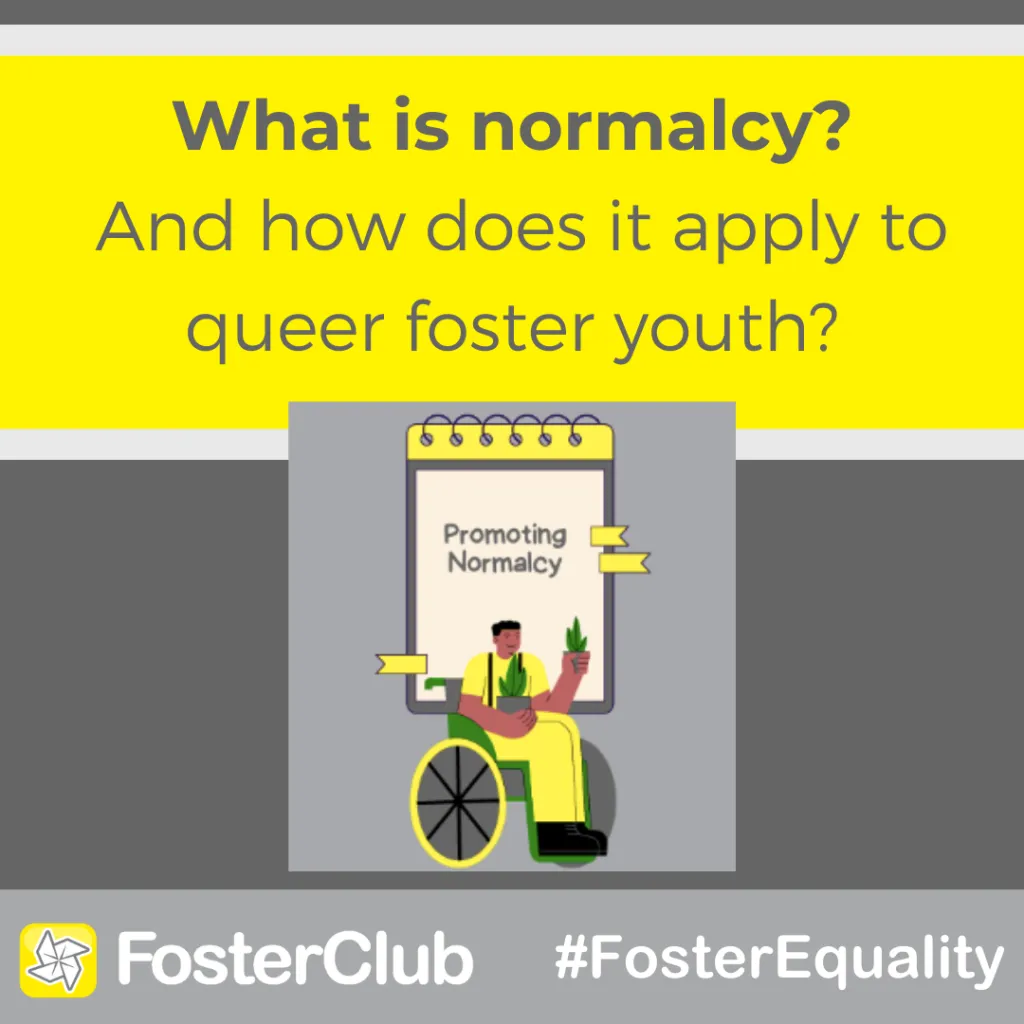
What is ‘normalcy’ and how does it apply to LGBTQIA2S+ youth in foster care?
The Foster Youth and Alumni Policy Council defines normalcy as the right of foster youth to regularly engage in extracurricular activities and “critical for establishing well-being for foster youth”. Without normalcy, foster youth can feel different from others, which impacts their ability to form lasting relationships and opportunities for healthy brain development. “There are interminable arguments to make in favor...
This work is supported by: