
The Data on Extended Foster Care Is In. Now What?

We say this a lot, and it’s worth saying again — every year, about 16,000 young people age out of foster care. Extended Foster Care (EFC) allows young people to remain in or re-enter foster care beyond age 18. Research shows it improves outcomes, but too few young people can access it. That means 16,000 young people could be getting support they need, and may not be.
This reality is what led to us asking two big questions:
- Why isn’t Extended Foster Care reaching more young people?
- What will it take to make EFC consistent and exceptional?
To answer those questions, the National Collaborative for Transition-Age Youth, formed by American Public Human Services Association (APHSA), FosterClub and Youth Villages, decided to dive deeper through surveys and focus groups with both child welfare professionals and young people with experience in foster care and EFC. Responses from over 400 young people across 46 states and 30 child welfare professionals from 19 states led to this report:
Creating Extended Foster Care That Works for All
Why This Matters
- 74% of young people surveyed said Extended Foster Care helped preparethem for adulthood.
- 45% reported gaps in essential life skills, even while participating in EFC.
- 44% of young people who did not participate in EFC said they didn’t know it existed.
What You Can Do
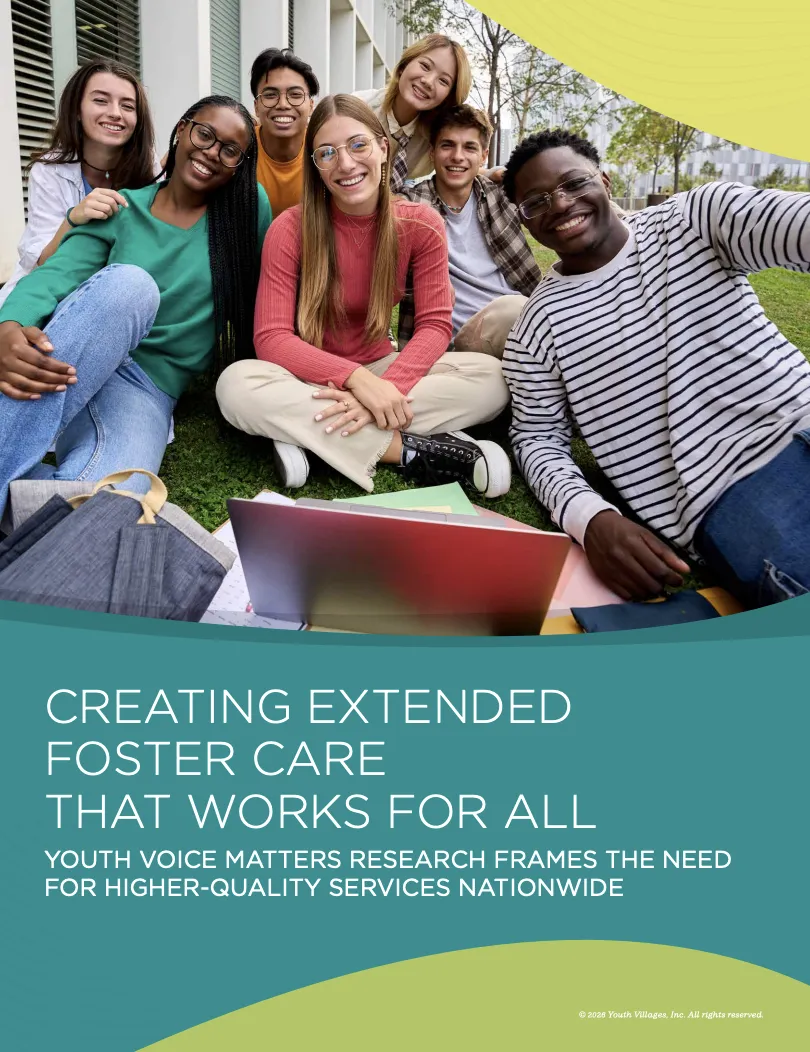
Creating Extended Foster Care That Works for All breaks down what Extended Foster Care looks like in the eyes of young people and child welfare professionals.
What’s currently happening, what the gaps are, and where we go from here.
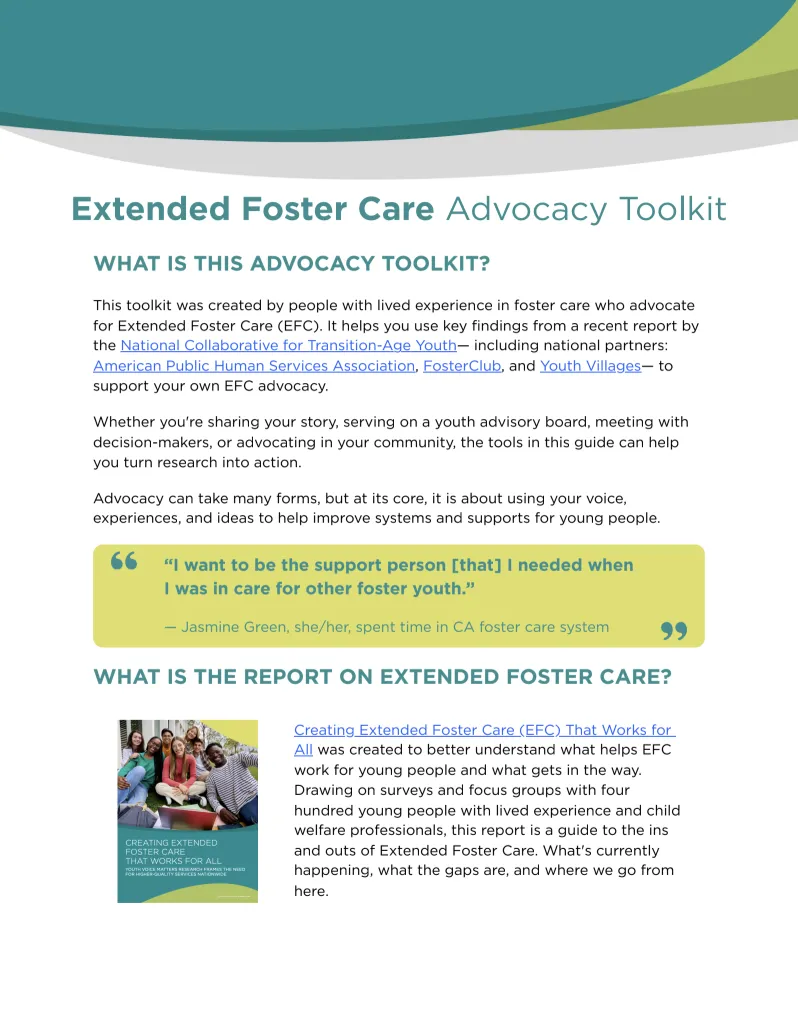
Taking data and turning it into action can be hard. That’s why we co-designed a toolkit with LEx Leaders currently doing just that. Wherever you’re advocating from, this has tips and tools to help you call for Extended Foster Care that works for every youth, everywhere.
The National Collaborative for Transition-Age Youth was formed to improve outcomes for young people who experience foster care and age out of child welfare systems. The collaborative brings together young people with lived experience in foster care, state and county child welfare leaders, advocates and three organizations working with this population nationally — American Public Human Services Association, FosterClub and Youth Villages.